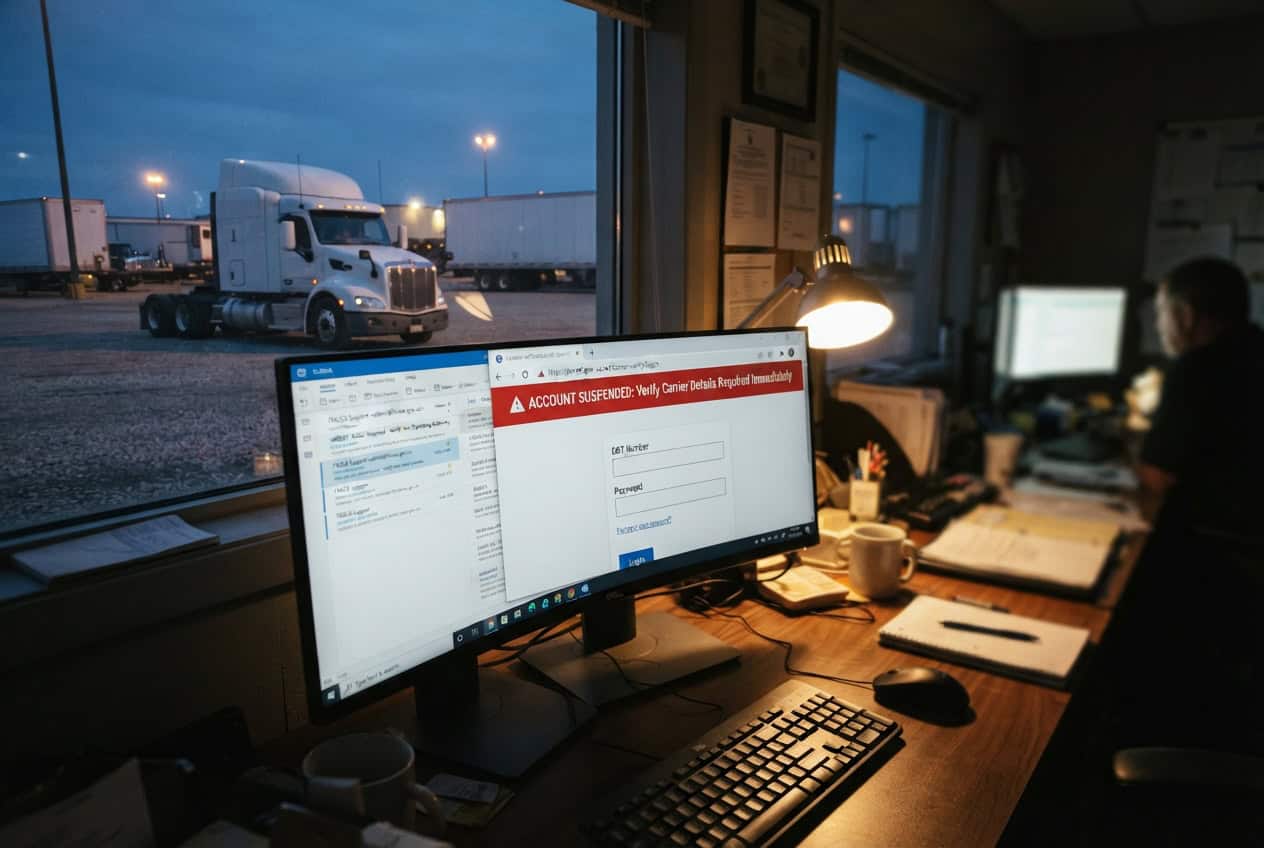
On this, the Second Day of the 12 Days of Cargo Crime, the Freight Fraud Prevention Hub (FFPH) is presenting a new series of blog posts, running now through Christmas Eve, to raise awareness of different cargo crime schemes, including cargo theft, freight fraud, and cyber-enabled cargo crimes. We will discuss how criminals take advantage of short staffing, tight schedules, and divided attention to misdirect, steal, and defraud shippers, brokers, and motor carriers during a season that is supposed to be merry and bright.
When it comes to carrier vetting, not all processes are created equal. Simply verifying that a carrier’s name exists on the Federal Motor Carrier Safety Administration (FMCSA) Safety and Fitness Electronic Records (SAFER) website is not enough.
Fraudulent carriers operate throughout the freight ecosystem. Some start seemingly legitimate trucking companies solely to steal cargo; others purchase or steal a legitimate carrier’s identity. Either way, the result is the same: damage to your bottom line and your hard-earned reputation when they steal the loads assigned to them.
Effective vetting combines several layers: identity and digital footprint checks, direct questioning, verification at pickup, and in-transit monitoring. If you run a fleet, expect new trading partners to ask these questions and complete these verification steps, and prepare your team to respond.
Verify the carrier’s identity and digital footprint
Start by confirming that the contact information a carrier provides matches its SAFER contact details. The person you are corresponding with may not be the listed contact, but the email domain should match. Always independently verify the contact details you are provided.
Verification should cover not only basic SAFER profile checks but also the carrier’s digital footprint. Did they recently purchase the company domain, or did the domain recently change ownership? Are they emailing you from Gmail, Yahoo, or another free email service? Check their website: Does it list accurate contact information, and is it fully functional? Many fraudulent carriers use AI to spin up legitimate-looking but generic websites designed to pass a quick glance, so take the time to inspect the site fully. Using a reputable vetting platform and checking for fraud reports related to the carrier are also wise moves. The takeaway: verify each carrier’s identity with multiple tools and techniques, cross-check the results, and flag any anomalies for further investigation.
Ask open-ended questions and verify at pickup
Even after digital vetting is complete, continue to treat a new carrier with caution. Ask specific questions about their equipment and locations. Instead of giving them options to choose from, ask open-ended questions that require them to answer from their own knowledge. This should pose no problem for a legitimate carrier but will likely trip up a fraudster looking to make a quick buck. Vetting is not finished once a carrier is assigned to a load. Verify everything at pickup, including the driver’s license and truck and trailer details down to the vehicle identification numbers (VINs). Do the truck, trailer, and driver that arrive match exactly what the contact told you? Any discrepancy is a major red flag that requires immediate additional verification before you release the load.
Monitor loads in transit
The vetting process does not end at the dock, though. Require carriers to provide tracking through an electronic logging device (ELD) or app as a condition of working with you. Monitor tracking data closely, and follow up immediately if tracking goes dark or the load deviates from the expected route or makes unexpected stops. Carrier vetting is an ongoing process and should never be considered “complete.” A carrier that appears legitimate today could be impersonated tomorrow—or worse, could have been a dormant fraudster from day one.
Escalate concerns and report fraud
When any step in the vetting process does not produce a satisfactory result, make sure your teams know what to do and have a clear, responsive escalation path. Remind your teams to report any instances of fraud or cargo crime to the FBI through the Internet Crime Complaint Center (IC3) at IC3.gov and to share information with industry peers through the NMFTA Threat Report Portal.
Verification is a process, not a checkbox. With cargo theft at historic levels, the stakes have never been higher.