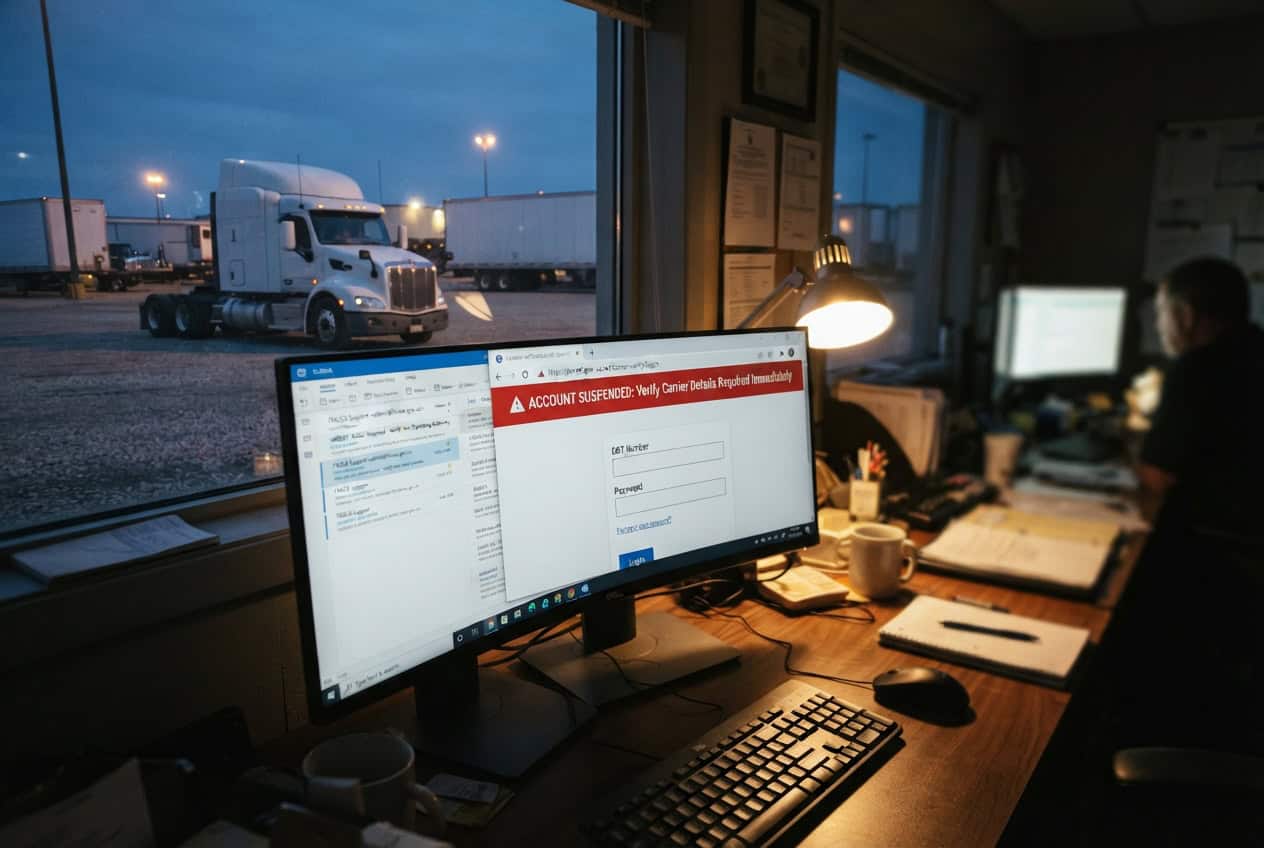
Security research firm ANY.RUN published findings on Nov. 17, 2026, describing three campaigns aimed at U.S. trucking and logistics companies that impersonate trusted carrier-verification, broker-onboarding and load-board platforms. The largest, which ANY.RUN tracks as “HelloFriends,” uses emails posing as the Federal Motor Carrier Safety Administration (FMCSA) and look-alike SAFER and Motus pages to collect Social Security and employer identification numbers, a purported $300 “administrative fee,” fleet fuel-card logins and one-time security codes, according to the report. ANY.RUN said it linked approximately 1,430 domains to the campaign in 2026, a figure GBHackers noted reflects infrastructure rather than the number of companies compromised.
The other two campaigns aim to place attacker-controlled software on dispatch and back-office computers. One, which the researchers call “NodeRemote,” uses fake broker onboarding pages and files dressed up as bills of lading, rate confirmations and insurance claims to install a backdoor, with new variants observed in October and November. A third cloned DAT and TIMOCOM load-board portals and, in a chain observed in October, installed remote-management software and a remote-access trojan that attempted to retrieve BitLocker recovery keys; researchers said they did not observe file encryption. The report did not quantify confirmed victims or financial losses.
The findings are relevant to carriers, brokers and shippers because email accounts, load-board logins and fuel-card accounts are common entry points for freight fraud. Highway’s Q3 2026 Freight Fraud Index, as reported by FreightWaves, attributed 40.2% of stolen-load reports in its network to compromised communications. ANY.RUN also noted that some of the FMCSA-themed emails passed SPF, DKIM and DMARC checks because the attackers controlled the sending domains, meaning those checks alone do not show a message actually came from a government agency or load board. The researchers recommended verifying requests through known contacts and reaching official portals directly rather than through links in unsolicited messages.
Sources
- ANY.RUN: Fake FMCSA, DAT, and TIMOCOM Portals: 3 Cyberattacks Targeting US Logistics (Nov. 17, 2026)
- Cyber Security News: Fake FMCSA, DAT, and TIMOCOM Portals Attack US Logistics Firms (Nov. 18, 2026)
- GBHackers: US Trucking Companies Targeted by Fake Carrier Verification Sites Stealing Passwords and Financial Data (Nov. 18, 2026)
- FreightWaves: Compromised communications linked to 40% of stolen loads in Highway fraud report (Nov. 7, 2026)