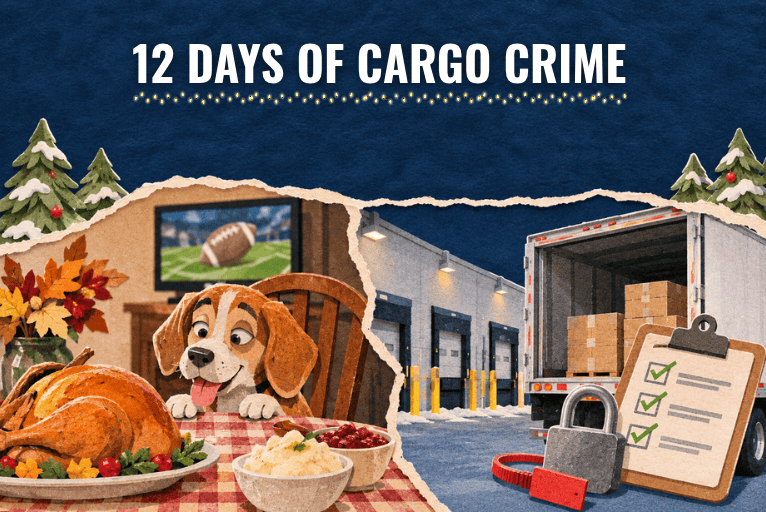
On this, the third day of the 12 Days of Cargo Crime, Thanksgiving dinner is over and everyone is settling in for football. The leftovers sit on the kitchen counter. Under the dining room table, the family dog has been waiting all day for this moment: the food is finally unguarded. Cargo thieves are the same: patient, watchful, and ready to pounce the moment attention drifts.
The cargo crime scheme
In December 2025, Keith Lewis of Verisk CargoNet told Transport Topics about a copper load stolen during what he called a “holiday week.” The company’s security team warned against using a particular driver, but in the crush of holiday freight, that driver got the load anyway and stole it.
This is why the “Season for Giving” is also the “Season for Stealing.”
- Distraction. Short-staffed teams juggling peak volume stop noticing details.
- Deadlines. Dispatchers may accept whichever carrier or driver can take the load right away when tight timelines leave them feeling rushed.
- Absence. Loaded trailers may sit unattended while staff are home celebrating the holidays.
The players
Carrier impersonators stage fictitious pickups, and rogue drivers can steal loads. Seasonal staff who often work without supervision in warehouses, on the docks, and in the yards may also be involved as insider threats. Remote dispatchers might be agents of an adversarial government, looking to earn foreign currency for their country’s regime. In almost all cases, the criminals know motor freight transportation as well as you do—and use that knowledge to find gaps to exploit.
Countermeasures
- Hold the line on vetting identities. Holiday volume is no reason to lower standards. When a driver arrives for that trailer of consumer electronics, verify that they’re the driver you’re expecting. If they can’t prove their identity, turn them away.
- Respect the red flag. If your company’s security team flags a driver or carrier, that decision stands and the load is not handed over, regardless of urgency.
- Call back on known numbers. When a pickup or appointment change comes in by call, email, or text, verify it through a known contact using the information on file—not the contact details in the incoming message. Make sure seasonal drivers also know how to verify a dispatcher’s identity using your company’s procedures.
- Check identities—and pay attention when something feels off. During seasonal job interviews, examine identity documents for signs of alteration or forgery. On a new hire’s first day, compare the photo on their identity card or license with the person in front of you. Don’t brush off a mismatch or an uneasy feeling.
- Don’t leave the turkey on the counter. Avoid leaving loaded trailers unattended when employees are not present. Use high-security seals, kingpin locks, and monitored lots.
The family dog may be trustworthy most of the time, but temptation to eat the turkey may win out. Secure the leftovers by putting them away before kickoff. It is easy to ignore procedure when everyone is distracted with thoughts of eating turkey, mashed potatoes, and pumpkin pie with the family, but trust and follow your company’s processes for guarding against fraudulent hiring, insider threats, and cargo theft.