
Quick Definition
A fictitious pickup occurs when freight is released to an unauthorized party impersonating a legitimate carrier or driver.
Fictitious pickups are one of the fastest-growing forms of cargo theft—and one of the most dangerous.
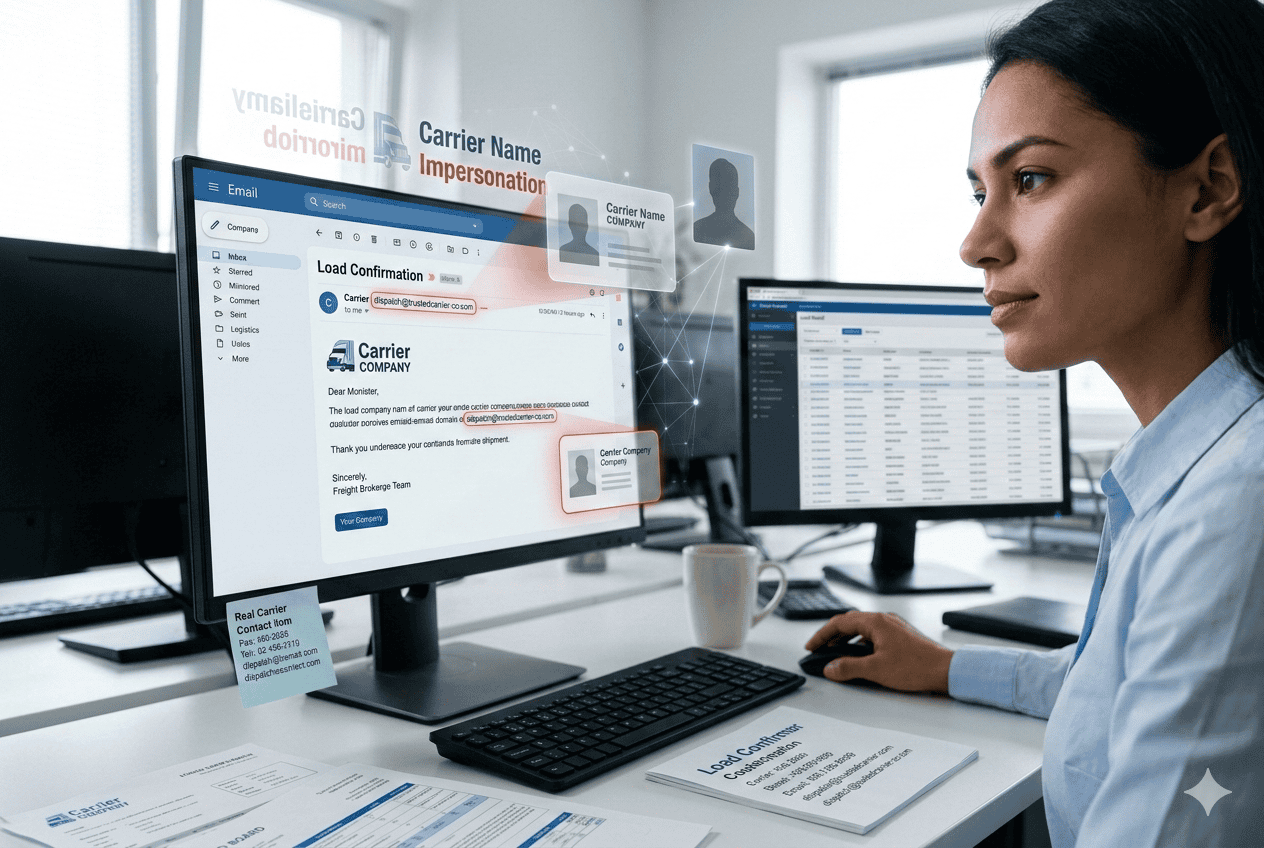
These schemes rely on digital impersonation first. Fraudsters gather shipment details through compromised emails, load boards, or stolen credentials. When they arrive at the facility, they look legitimate: correct load number, paperwork, and timing.
Once the freight leaves the dock, it’s often gone for good.
Why This Fraud Works
Facilities are optimized for speed. When someone shows up with the “right” information, there’s pressure to keep freight moving.
Fraudsters exploit:
- Weak identity verification at pickup;
- Overreliance on paperwork; and
- Trust in digital communications without validation.
Real-World Scenario
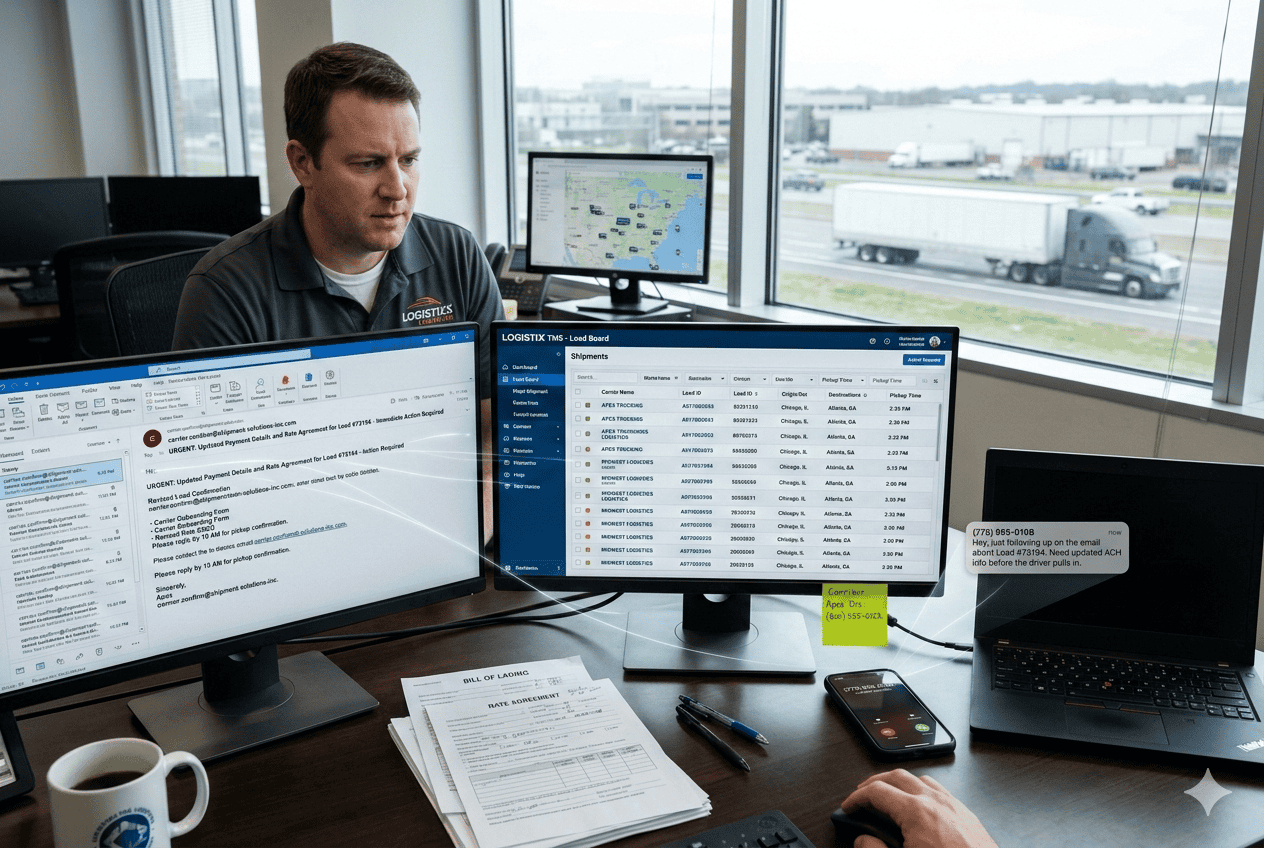
A warehouse receives an email—appearing to come from a known broker—requesting a last-minute carrier change. The new driver arrives with matching documents. Hours later, the real carrier calls asking why the load was released.
Key Warning Signs
Any deviation from standard business process surrounding pickup of shipments
- Last-minute changes to carrier or driver details;
- Urgent requests that bypass standard procedures;
- Credentials that “look right” but aren’t verified; and
- Pickup requests outside normal patterns.