
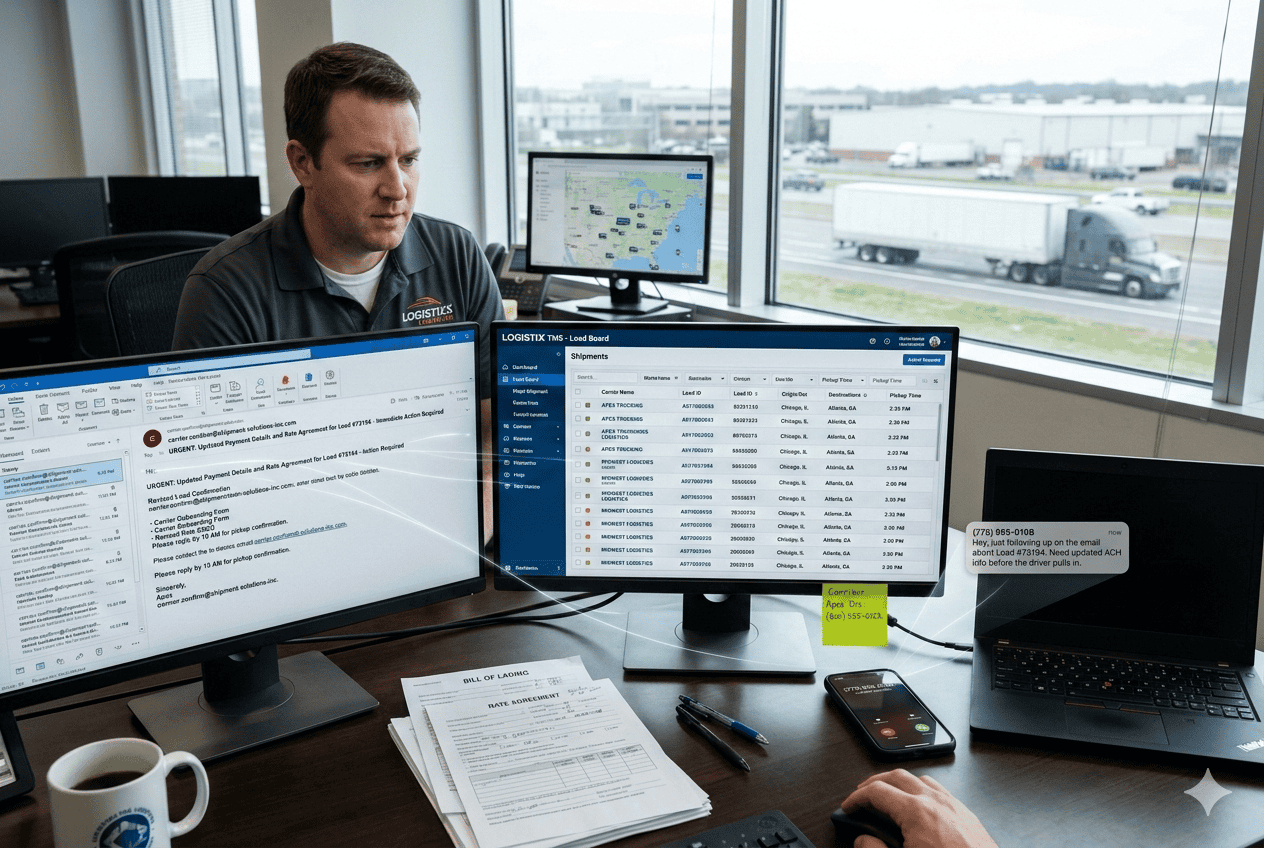
Quick Definition
Social engineering is the manipulation of people—rather than systems—to gain unauthorized access to freight, data, or financial resources.
- Phishing: Emails posing as trusted partners;
- Vishing: Phone calls impersonating IT, dispatch, or leadership; and
- Smishing: SMS/Text messages impersonating load boards, or other trusted platforms or individuals.
Social engineering exploits trust, routine, and urgency.
Rather than hacking systems, criminals trick employees into revealing information, bypassing procedures, or granting access. In trucking and logistics—where speed and coordination are essential—this tactic is especially effective.
Common Social Engineering Tactics
All social engineering attacks leverage one or more of the following tactics:
- Creating a false sense of urgency – you must act NOW!
- Creating a fear of consequences by impersonating an authority figure;
- Creating a false sense of trust or familiarity; and
- Creating a pretense for requiring secrecy.
These attacks often precede identity misuse, fictitious pickups, or cargo theft.
Real-World Scenario
A dock employee receives a call from someone claiming to be with dispatch, stating a driver is running late and credentials will be emailed shortly. Wanting to keep freight moving, the employee releases the load. The driver was never authorized.

Why Social Engineering Works
Employees want to be helpful:
- Transportation workflows prioritize speed; and
- Fraudsters exploit authority and urgency.
Even well-trained teams can be caught off guard.
Common Red Flags
- Requests that bypass standard verification;
- Pressure to act immediately;
- Unusual changes to normal workflows;
- Slight inconsistencies in email domains or caller details; and
- A caller/emailer stumbles over simple questions or gets upset or changes the subject when questioned.