
Quick Definition
Carrier identity theft occurs when a legitimate motor carrier’s credentials or identifiers are stolen or misused to fraudulently move freight, access systems, or receive payment.
What Is Carrier Identity Theft?
Carrier identity theft and misuse are two of the most damaging forms of freight fraud because they exploit real trust and they can destroy carrier reputations that were carefully built over many years.
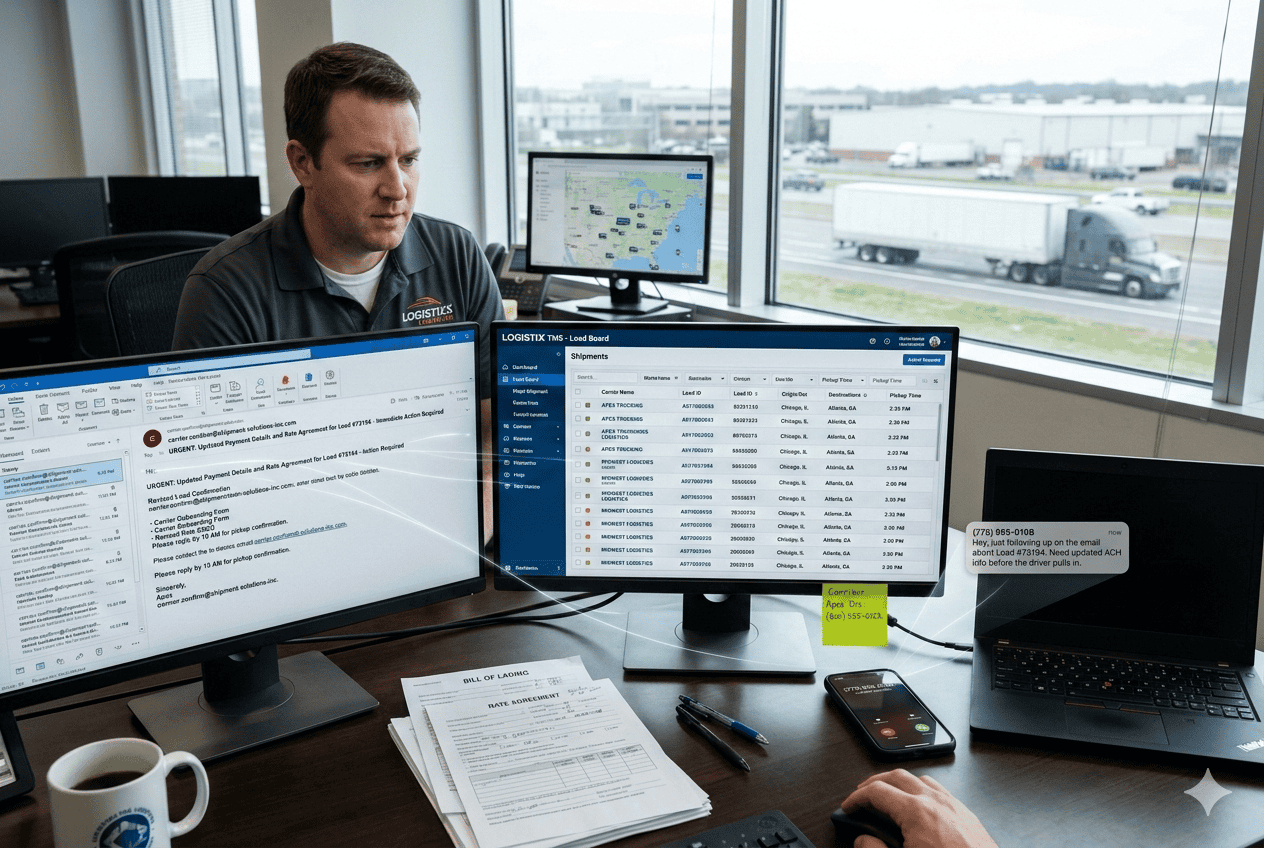
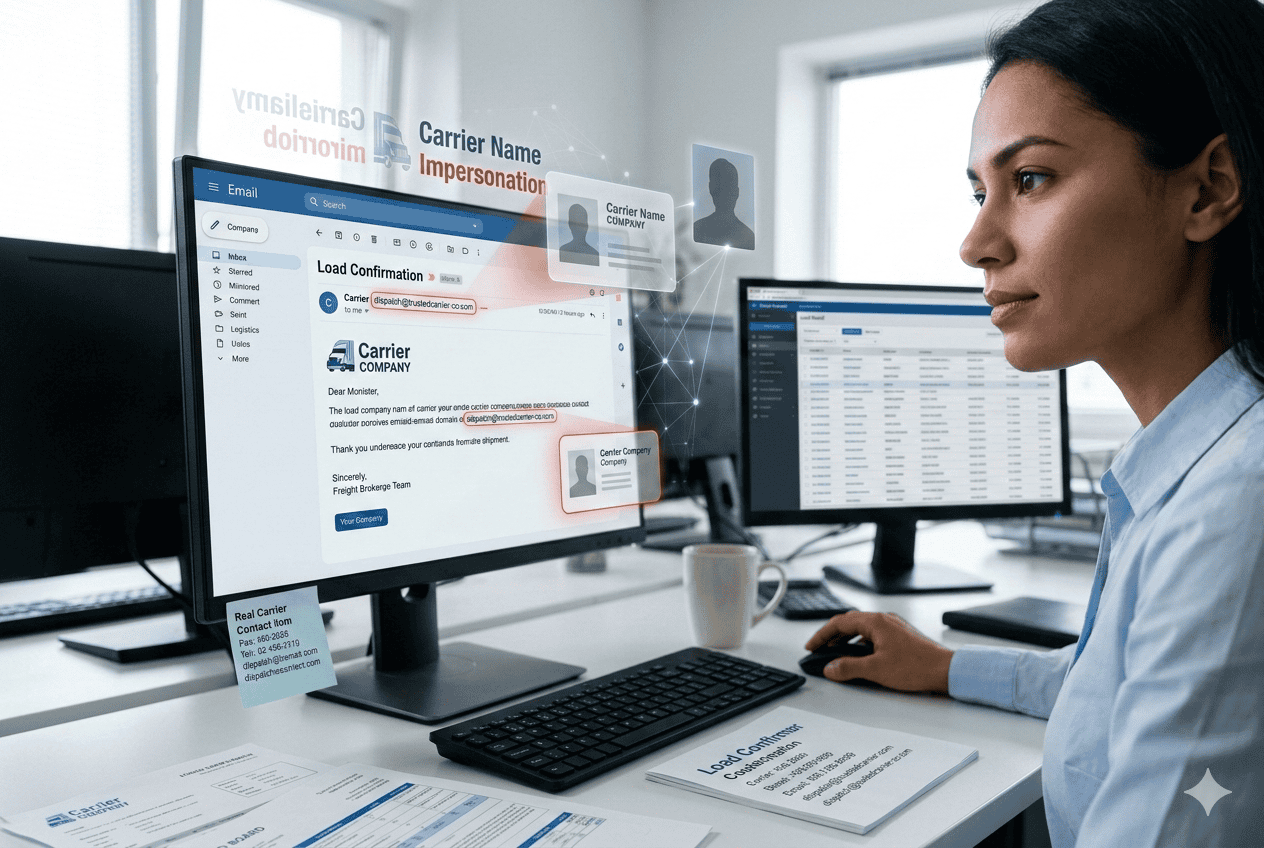
Rather than inventing a fake company, fraudsters steal the identity of a legitimate carrier—using their name, United States (U.S.) Department of Transportation (USDOT) number, Standard Carrier Alpha Code® (SCAC™), insurance details, or digital credentials to appear authorized, and using their hard-earned reputation to build trust.
Once trust is compromised, fraud can spread quickly across shippers, brokers, load boards, and facilities.
Real-World Scenario
A trusted carrier begins receiving calls about loads they never hauled. Investigations reveal their identity was used to secure multiple shipments across different brokers. The freight was stolen—but the carrier’s reputation suffered.
How Carrier Identities Are Stolen or Misused
Common methods include:
- Compromised email or load board accounts;
- Stolen onboarding documents;
- Misused public registration information;
- Reused credentials across platforms; and
- Forged documents bearing real carrier details.
The carrier often doesn’t know their identity is being misused until damage has already occurred.
Why Carrier Identity Theft Is So Effective
Carrier identity theft works because:
- The identity is legitimate;
- Documents and credentials check out; and
- Partners assume trust based on familiarity.
Fraudsters don’t need to break systems—they only need to borrow credibility.
Common Warning Signs
- Loads assigned to a carrier without their knowledge;
- Unexpected payment disputes or claims;
- Customers reporting issues the carrier didn’t cause; and
- Duplicate carrier profiles across platforms.
Early detection is critical to limiting impact.
The Broader Impact of Carrier Identity Theft
Carrier identity theft harms:
- Shippers and brokers through lost freight;
- Insurers through fraudulent claims;
- Legitimate carriers through reputational damage; and
- The industry through eroded trust.
It turns trusted identities into weapons.
How NMFTA Helps Protect Carrier Identity
NMFTA helps the industry move from assumed trust to verified trust by advancing:
- Identity assurance frameworks;
- SCAC-based verification tools;
- Cybersecurity education to reduce credential compromise; and
- Digital standards that support consistent identity validation.
These efforts help ensure that when a carrier is trusted, it’s for the right reasons.
The Takeaway
Carrier identity theft succeeds when trust is easy to fake.
Stopping it requires stronger verification, shared standards, and industry-wide vigilance—before freight is released, not after it’s lost.