
Quick Definition
Document forgery in freight occurs when shipping documents are altered, fabricated, or reused to gain unauthorized access to cargo, services, or payments.
What Is Document Forgery in Freight?
Document forgery is one of the oldest forms of freight fraud—but it has evolved alongside digital systems.
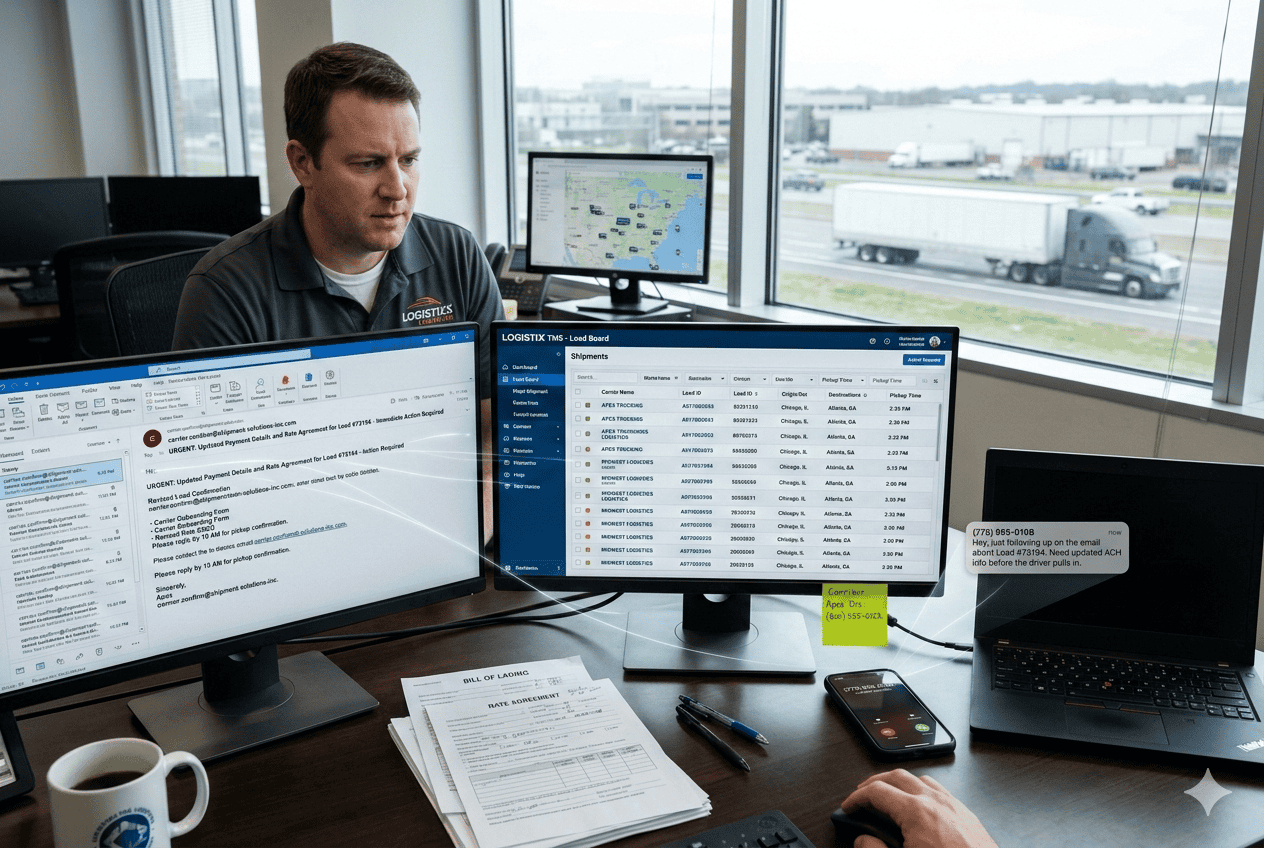
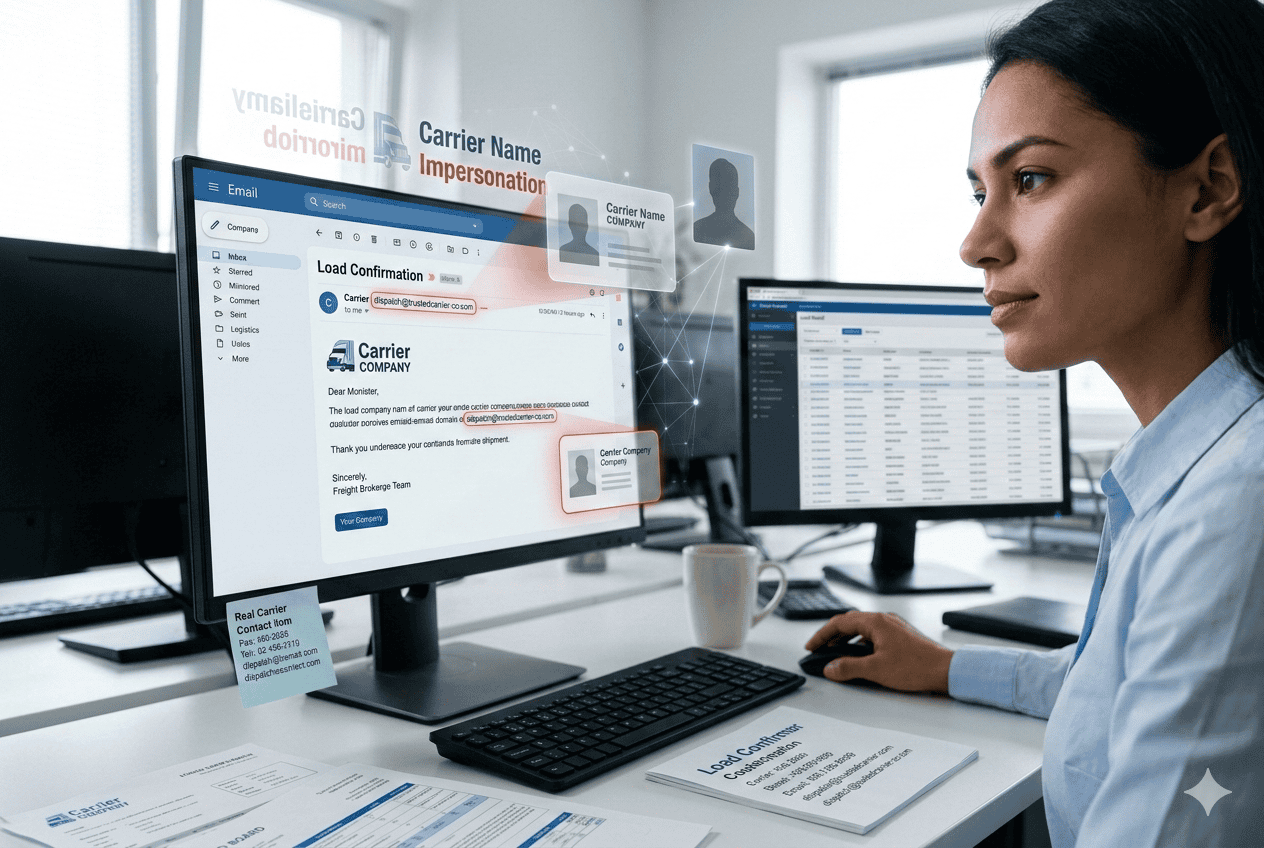
Today, forged documents don’t always look crude or suspicious. Criminals frequently start with legitimate documents, then modify key details to redirect freight, impersonate authorized parties, or justify fraudulent billing and insurance claims.
Since freight relies heavily on both digital and paper documents, maintaining the integrity of these documents is essential for controlling and securing shipments.
Real-World Scenario
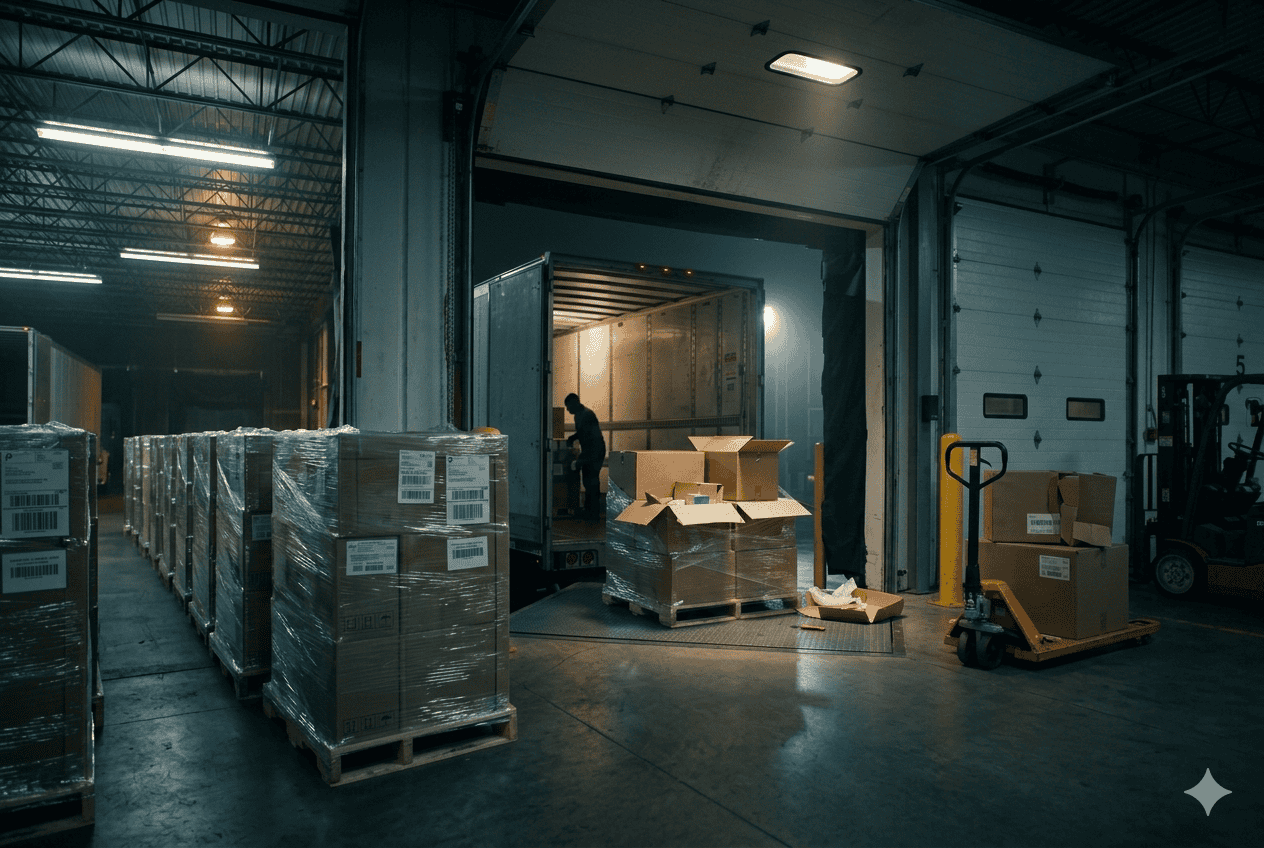
A warehouse releases freight based on a BOL that appears legitimate. The load number, shipper name, and consignee all match internal records. The only change—a different carrier name—goes unnoticed.
By the time the discrepancy is discovered, the freight has been delivered to an unauthorized location.
Commonly Forged Freight Documents
Document forgery can involve many types of records, including:
- Bills of lading (BOLs);
- Rate confirmations;
- Proofs of delivery (PODs);
- Insurance certificates; and
- Carrier authority or onboarding documents.
Often, only one field is altered—such as a delivery location, carrier name, or reference number—making forgery difficult to detect without verification.
How Document Forgery Enables Broader Fraud
Forged documents rarely exist in isolation. They are commonly used to enable:
- Altered destination;
- Cargo theft and hijacking;
- Double brokering;
- Billing and insurance fraud; and
- Carrier identity misuse.
In many cases, the document is the “permission slip” that makes fraud possible.
Why Document Forgery Is Hard to Detect
Several industry realities contribute:
- Continued reliance on paper or hybrid documents;
- Inconsistent formatting across partners;
- Time pressure at pickup and delivery; and
- Lack of standardized verification practices.
Forgery thrives where trust is assumed instead of confirmed.
Key Warning Signs
- Handwritten or last-minute changes;
- Mismatched formatting or fonts;
- Inconsistencies between digital records and documents presented;
- Documents reused across unrelated shipments; and
- Destination on the BOL doesn’t match planned destination.
Individually, these may seem minor. Together, they warrant closer scrutiny.
Why Document Integrity Matters
When documents can be easily altered, every downstream control weakens:
- Identity verification;
- Custody tracking;
- Claims processing; and
- Auditability.
Protecting document integrity is foundational to fraud prevention.
How NMFTA Helps Reduce Document Forgery Risk
National Motor Freight Traffic Association, Inc.® (NMFTA)™ and its partners help reduce reliance on easily manipulated documents by advancing:
- Education on common forgery tactics;
- Classification integrity to reduce misrepresentation;
- Digital standards that improve consistency and traceability; and
- Identity verification frameworks that tie documents to trusted parties.
Together, these efforts make forgery harder to execute—and easier to spot.
The Takeaway
Document forgery doesn’t just falsify paperwork.
It falsifies trust.
Preventing it requires stronger standards, better verification, and shared awareness across the freight ecosystem.