
Quick Definition
Freight fraud is the use of deception, impersonation, or manipulation to steal cargo, money, or services across the transportation and logistics ecosystem.
Freight fraud is not a single tactic—it’s a category of crimes that exploit trust.
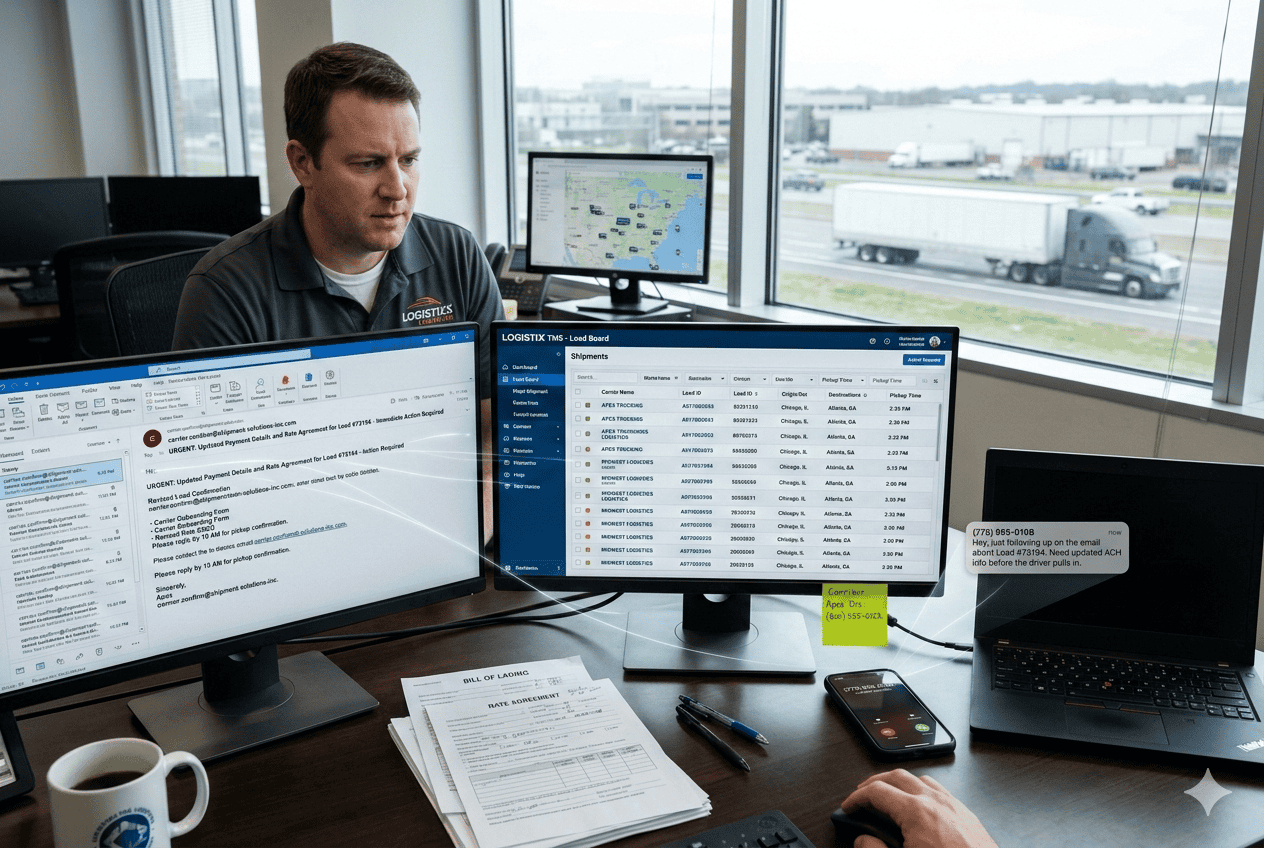
Fraudsters take advantage of the fact that freight must keep moving. They impersonate legitimate businesses, manipulate documents, misuse identities, and exploit digital systems to gain access to freight, data, or payments.
In today’s environment, freight fraud is increasingly digital, highly coordinated, and fast-moving.
Common Forms of Freight Fraud
Freight fraud includes—but is not limited to:
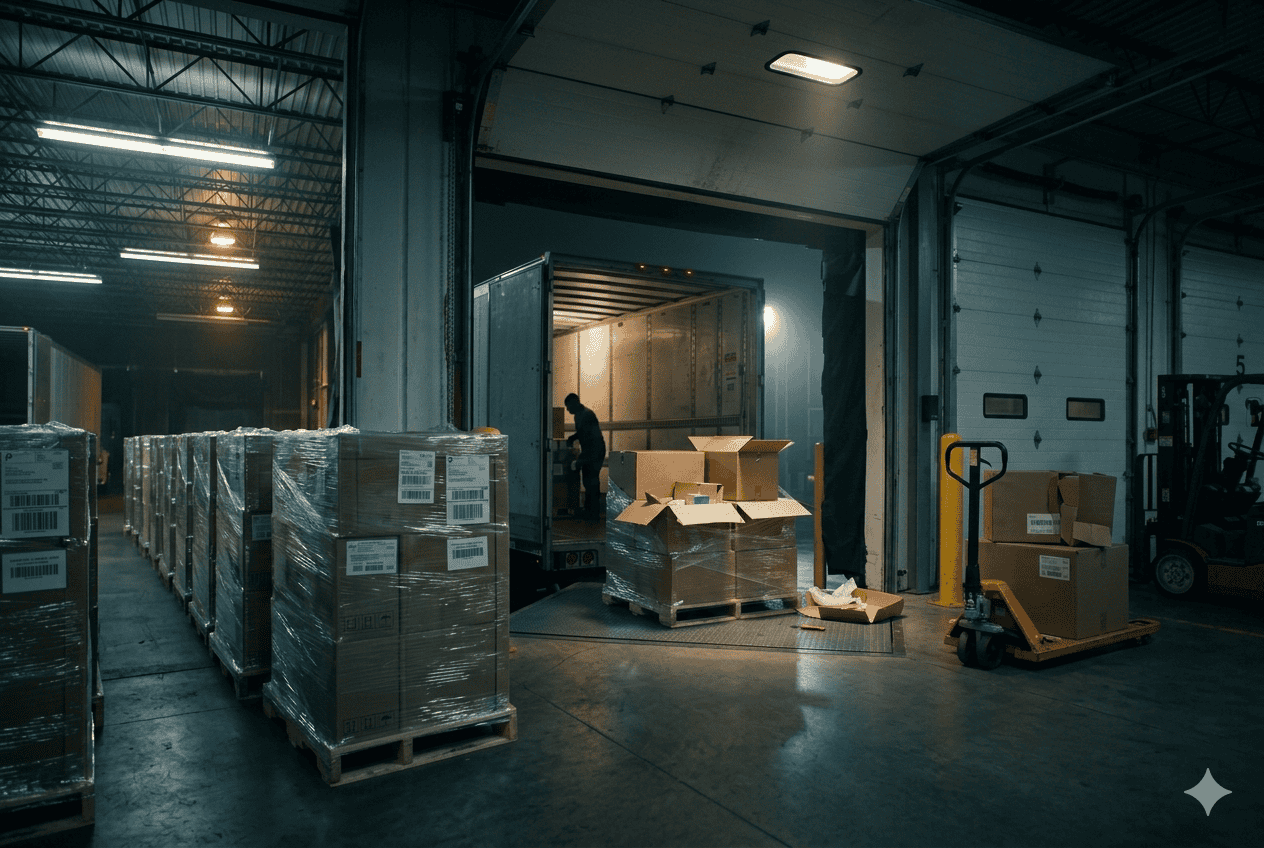
- Fictitious pickups
- Double brokering
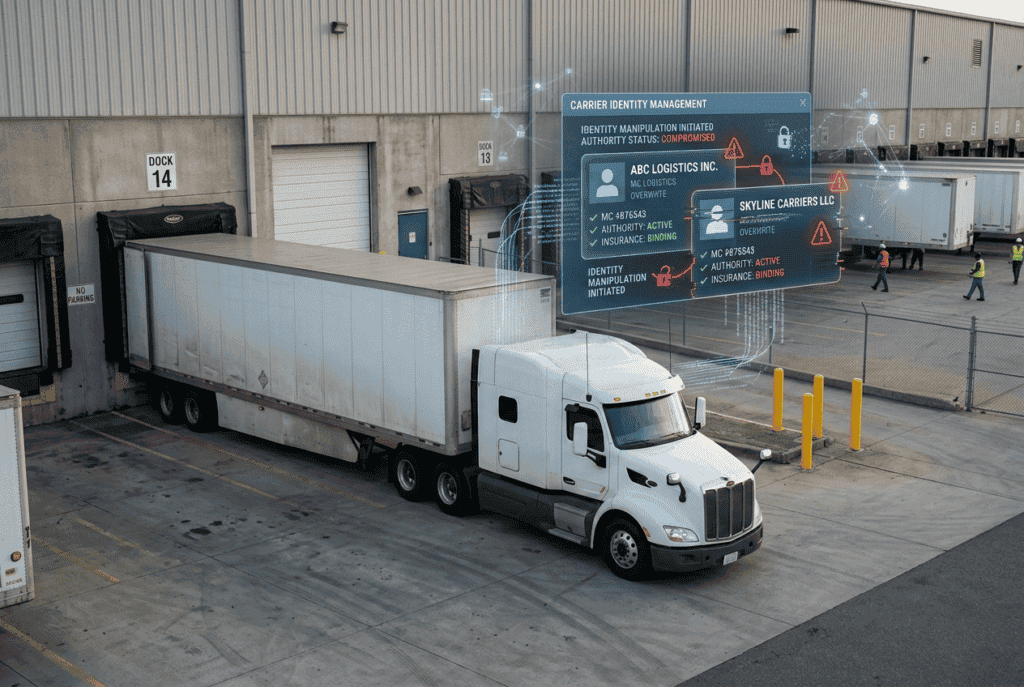
- Carrier identity theft
- Load board fraud
- Document forgery
- Billing and insurance fraud
- Social engineering and impersonation
While the tactics differ, the goal is the same: borrow trust long enough to extract value.
Freight Fraud Has Become Cyber-Enabled
Historically, freight fraud relied on forged paperwork and insider knowledge. Today, it leverages:
- Common cybercrime techniques and social engineering
- Compromised email accounts
- Stolen credentials and identifiers
- Digital freight marketplaces
- Poorly verified identities
- Fragmented systems and standards
Fraud now scales at the speed of digital transactions.

Real-World Scenario
A shipper receives a routine email confirming a carrier assignment. Everything looks correct. The load is released on schedule.
Days later, the real carrier calls… confused. Their identity had been impersonated. The freight was never authorized, never delivered, and never recovered.
No systems were “hacked.” Trust was simply misused.
Why Freight Fraud Is So Difficult to Stop
Freight fraud thrives where:
- Verification is assumed rather than confirmed
- Speed outweighs scrutiny
- Digital and physical controls aren’t aligned
- Responsibility is fragmented across parties
Criminals exploit handoffs—between systems, companies, and people.
The Cost of Freight Fraud

Cargo losses and financial damage

Operational disruption

Reputational harm

Higher insurance and compliance costs
More importantly, it erodes trust across the entire freight ecosystem.

How NMFTA Helps Stop Freight Fraud
NMFTA is uniquely positioned to address freight fraud because it operates at the system level, not just the incident level.
Through the Freight Fraud Prevention Hub, NMFTA brings together:
- SCAC-based identity trust
- Cybersecurity research and education
- Classification controls
- Digital standards development
Together, these efforts help the industry move from reactive defense to proactive protection.
The Takeaway
Freight fraud is preventable—when trust is verified and standards are shared.
Stopping fraud isn’t about slowing freight down. It’s about making deception harder to succeed.