Quick Definition
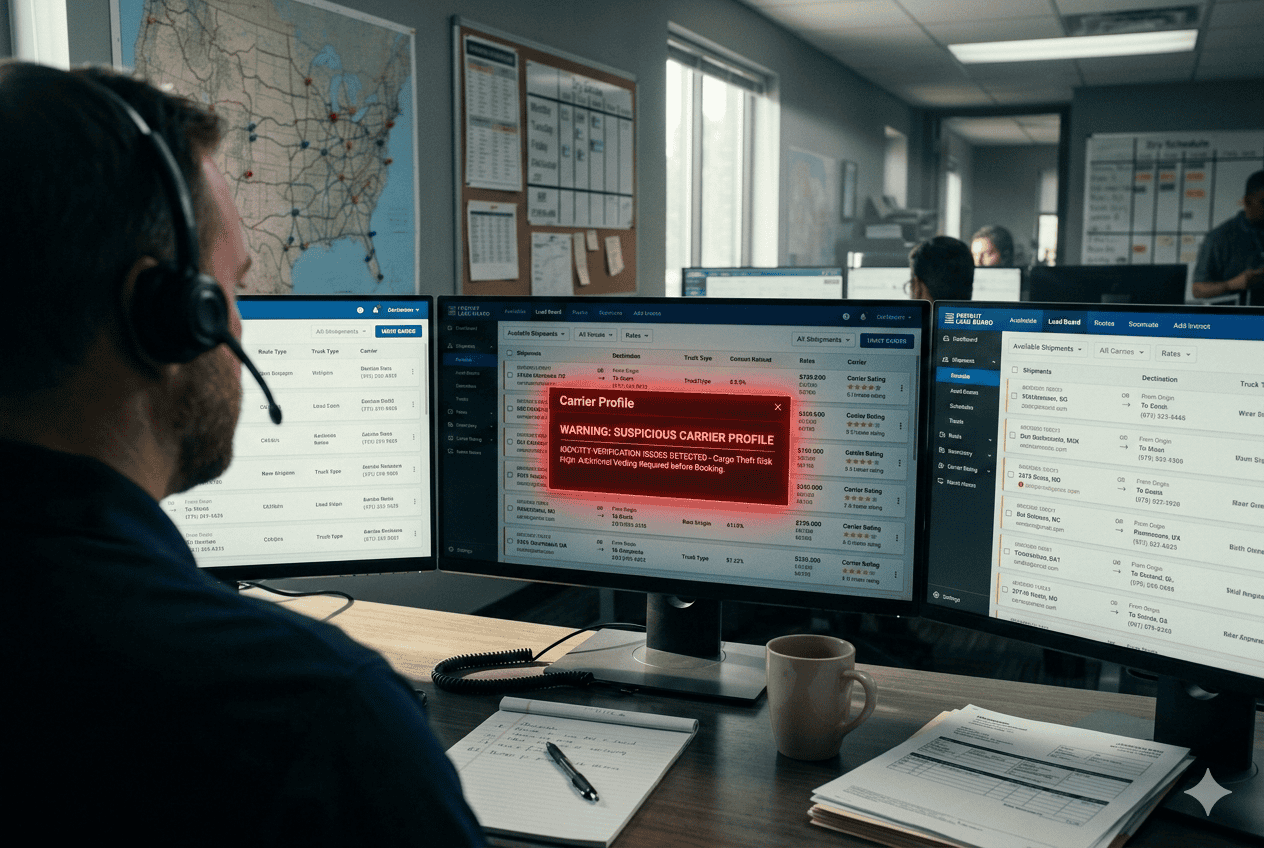
Load board fraud occurs when criminals exploit digital freight marketplaces to impersonate legitimate carriers or brokers, secure loads under false pretenses, and steal cargo or payments.
What Is Load Board Fraud?
Not all freight fraud looks like theft at a dock.
Load boards are designed to increase efficiency and connectivity—but that same speed and scale make them attractive to fraudsters.
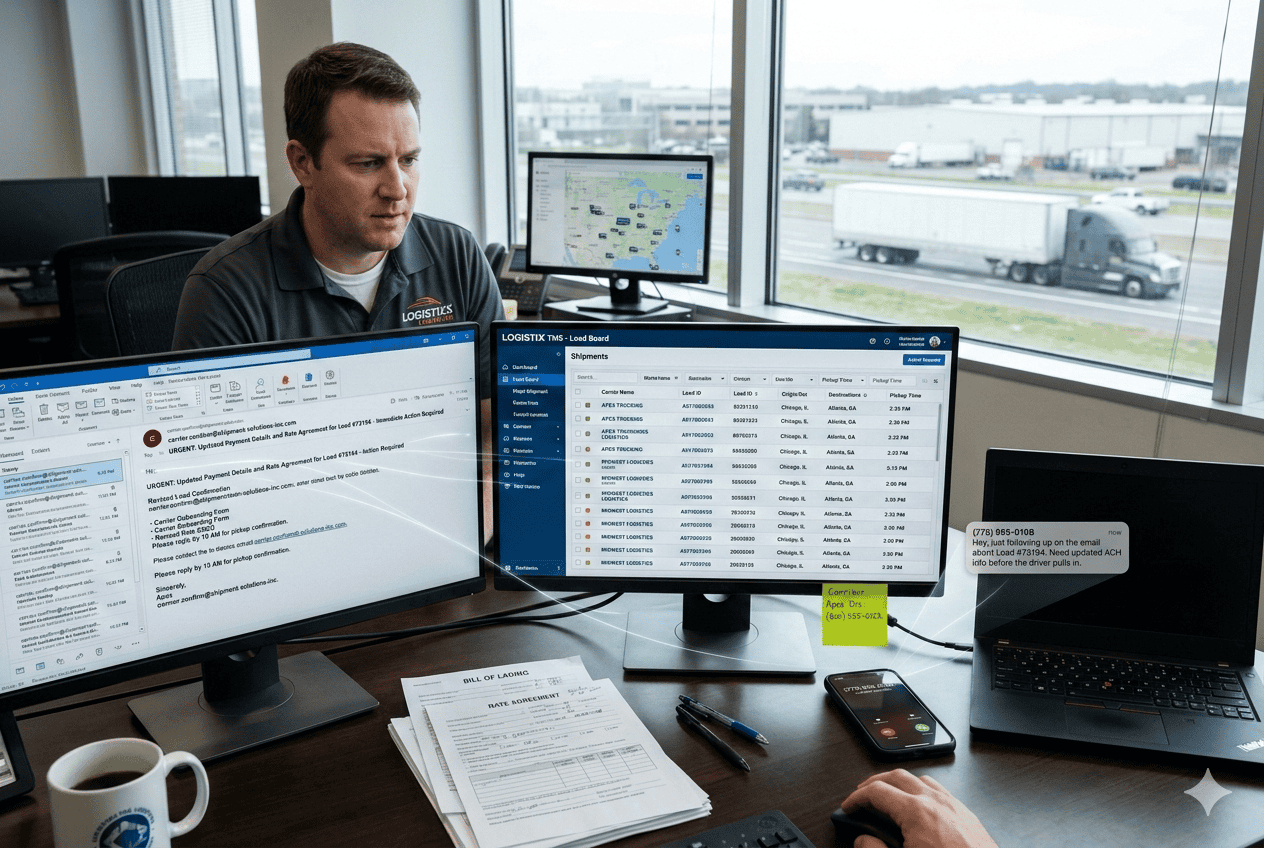
In a typical scheme, a criminal creates or hijacks a carrier profile using stolen credentials, fabricated documentation, or a misused identity. Once established, they rapidly accept loads, reroute communications, and disappear after pickup or payment.
Load board fraud is rarely a single incident. It is often high-volume, repeatable, and coordinated, allowing fraudsters to strike multiple shippers or brokers before detection.
Why Load Board Fraud Is Rising
Several industry realities have made load boards a prime target:
- Increased reliance on digital marketplaces
- Pressure to move freight quickly
- Fragmented identity verification across platforms
- Limited cross-platform fraud signaling
When trust is assumed instead of verified, fraud scales fast.
Real-World Scenario
A broker awards a load to a carrier with a clean-looking profile and competitive rate. The carrier picks up the freight, provides tracking updates for several hours, then goes silent. The carrier profile is later removed from the load board, along with dozens of other fraudulent listings tied to the same identity.
Common Red Flags
- Newly created or recently updated carrier profiles;
- Reluctance to verify identity outside the platform;
- Requests to move communication off-platform; and
- Unusual urgency to accept loads without negotiation.
Why This Is More Than a Marketplace Problem
Load board fraud often feeds into fictitious pickups, cargo theft, double brokering, and identity misuse. The marketplace is just the entry point.