Quick Definition
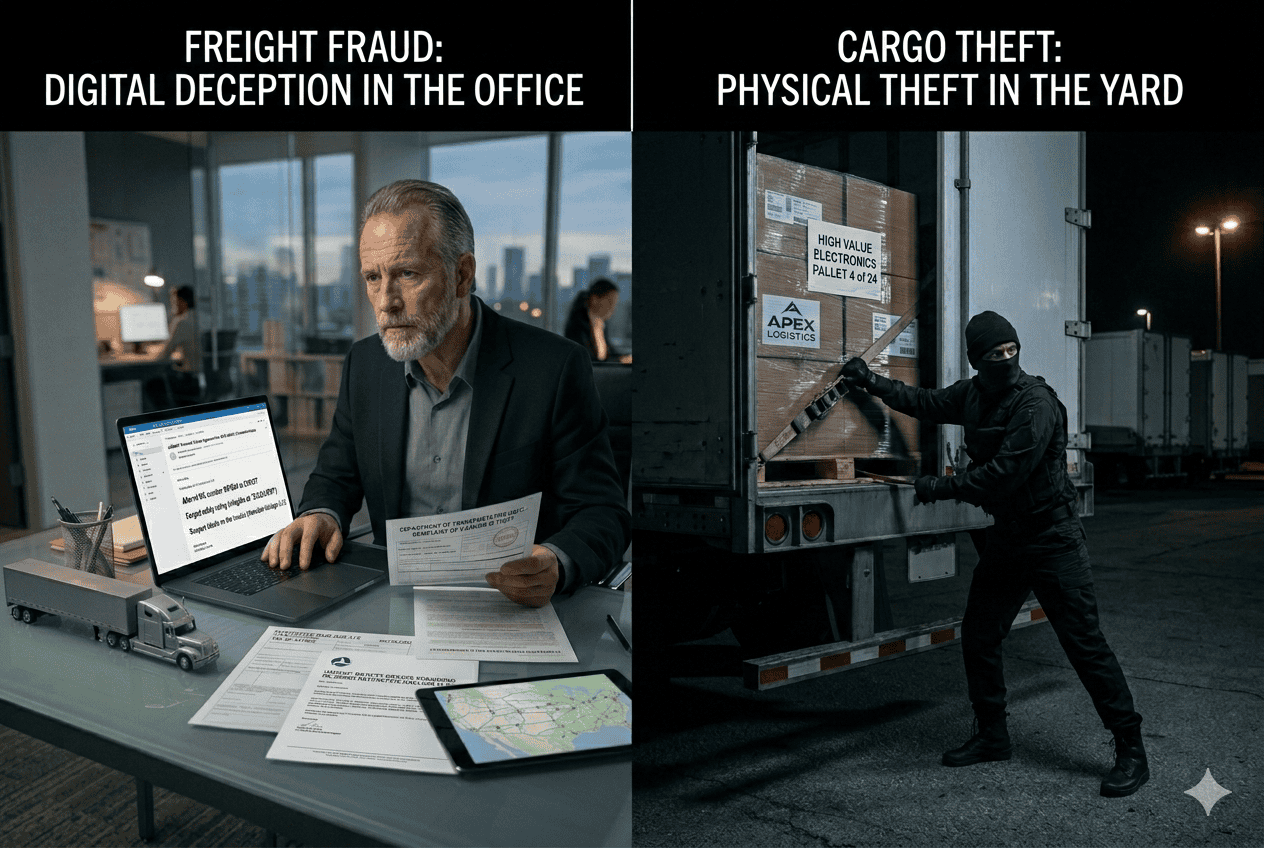
Freight fraud uses deception to steal value; cargo theft is the physical taking of goods. Today, the two are increasingly connected—and often part of the same crime.
Understanding the Difference
At a high level:
- Freight fraud focuses on deception and manipulation
- Cargo theft focuses on the physical removal of freight
But treating them as separate problems is increasingly ineffective.
Modern cargo theft is often enabled by freight fraud, and freight fraud often culminates in cargo theft.
What is Freight Fraud?
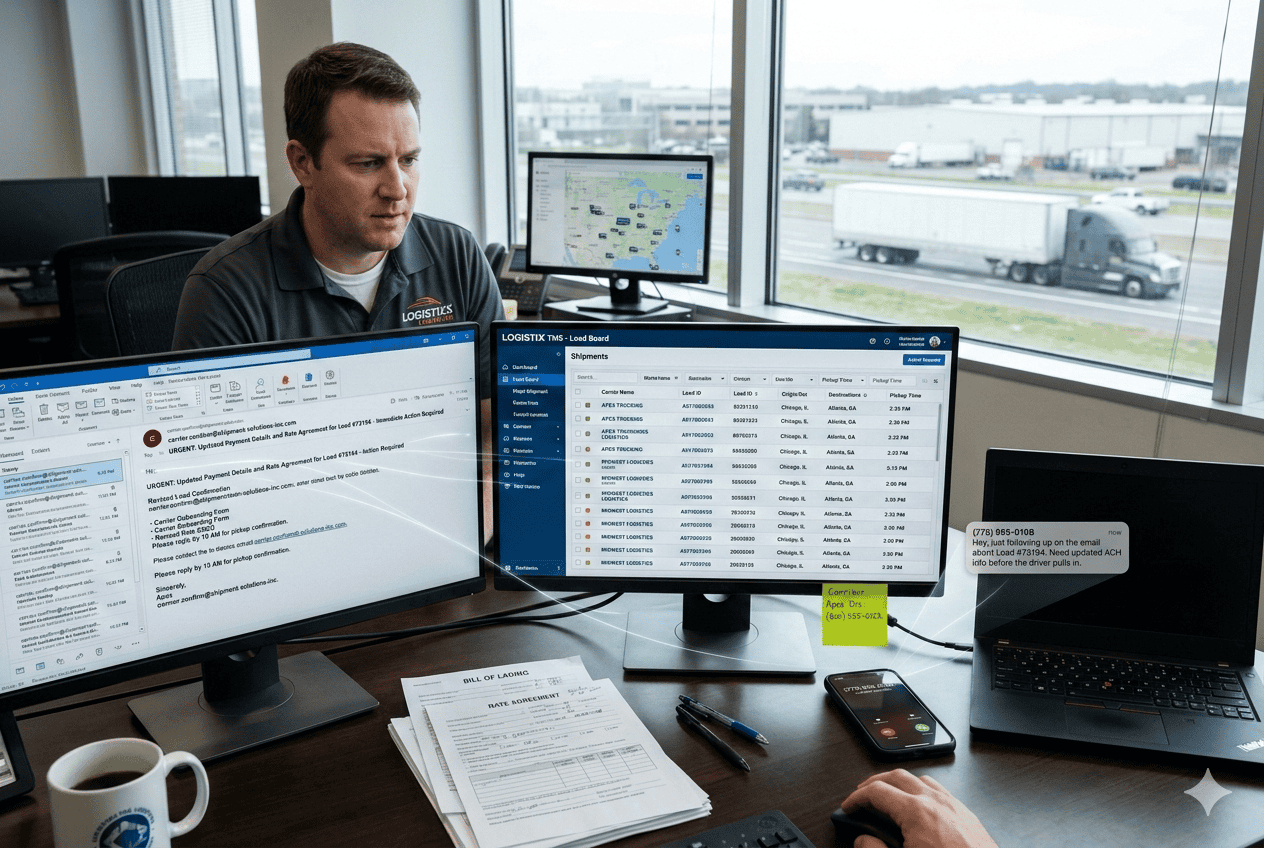
Freight fraud involves tactics such as:
- Identity impersonation;
- Fictitious pickups;
- Double brokering;
- Document forgery; and
- Billing and insurance fraud.
The common thread is misused trust—convincing someone to release freight, data, or money under false pretenses.
What is Cargo Theft
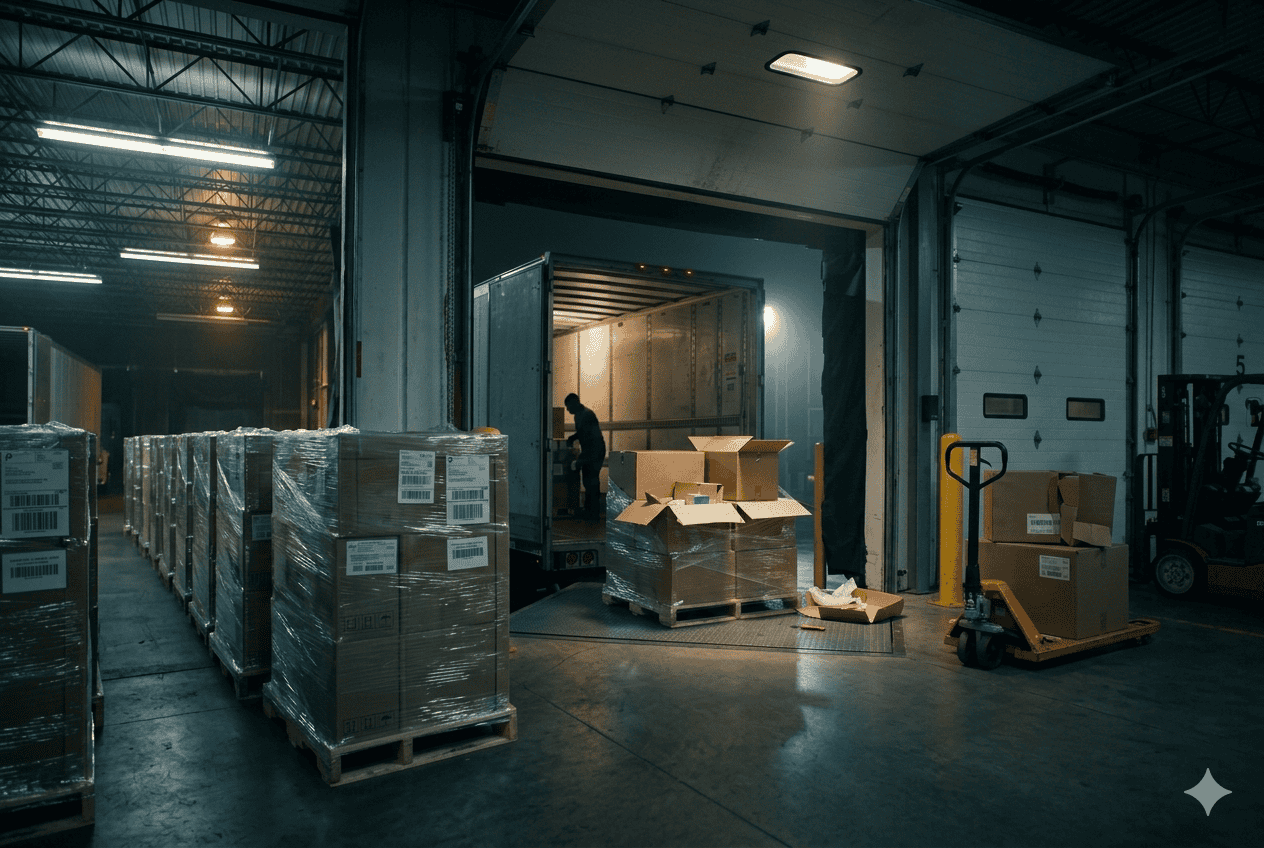
Cargo theft is the physical loss of freight:
- Theft at rest (yards, warehouses, parking areas)
- Theft in transit (hijacking, deception, forced stops)
While the act is physical, the planning is often digital.
How the Two are Connected
In many cases, cargo theft is the final step in a longer fraud chain:
- Shipment data is compromised;
- Identities are impersonated;
- Documents are altered;
- Freight is released or rerouted; and
- Cargo is physically stolen.
Without the fraud, the theft would not occur.
Real-World Scenario
A shipper experiences what appears to be a routine cargo theft. Investigation reveals the pickup was authorized using falsified documents tied to a real carrier’s identity. The physical theft was real—but it was enabled by fraud long before the truck arrived.
Why This Distinction Matters
Organizations that focus only on physical security often miss:
- Identity misuse;
- Digital access vulnerabilities; and
- Document integrity issues.
Likewise, organizations focused only on cyber risk may overlook:
- Yard security;
- Driver safety; and
- In-transit controls.
Effective prevention requires both.
Key Indicators of a Blended Threat
Legitimate looking paperwork tied to a theft
Accurate shipment details used by criminals
Repeated losses tied to identity misuse
Theft patterns aligned with data exposure

How NMFTA Helps Bridge the Gap
NMFTA’s approach treats freight fraud and cargo theft as two sides of the same problem.
By unifying:
- Identity verification;
- Cybersecurity best practices;
- Classification integrity; and
- Digital API standards.
NMFTA helps the industry move from reactive loss response to proactive prevention.
The Takeaway
If fraud enables theft, then stopping fraud stops theft.
Understanding the difference—and the connection—between freight fraud and cargo theft is the first step toward building a safer, more trusted freight ecosystem.